
It is easy to think of innovation as the creation of something entirely new.
But innovation can happen in much simpler and arguably more powerful ways. An engineer may look closely at a product that has worked for decades, notice where people still struggle while using it, and ask whether those everyday difficulties can be engineered out.
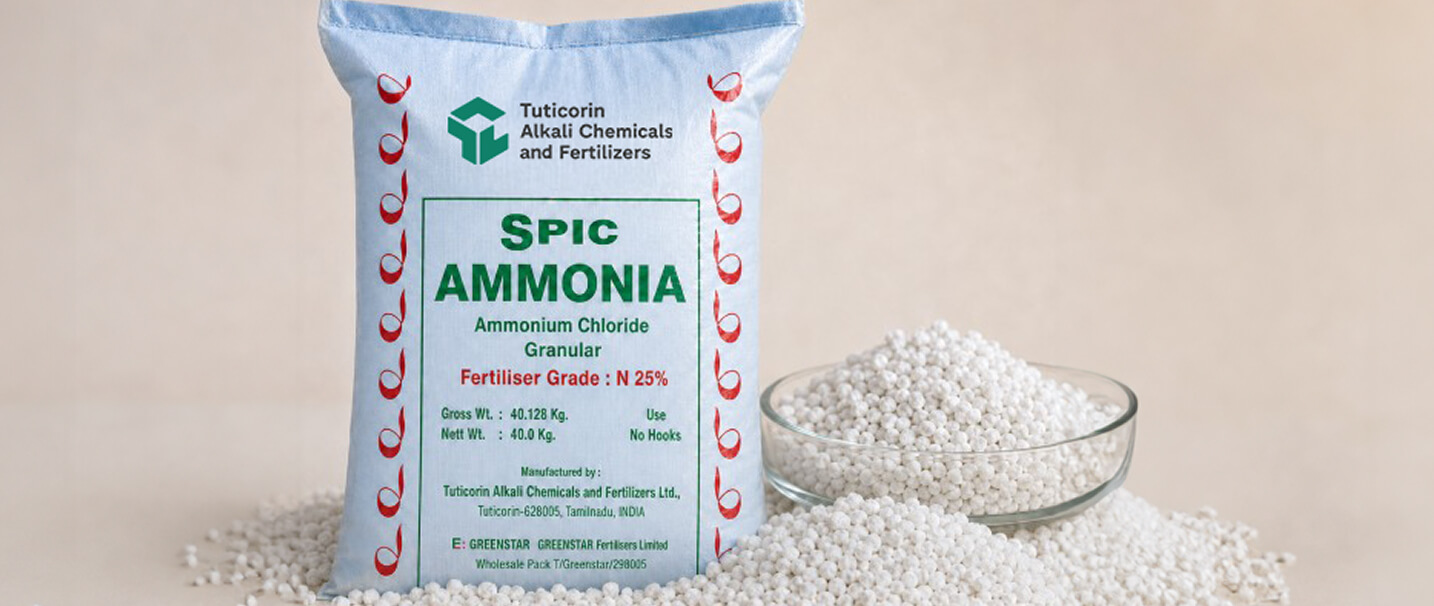
That is the thinking that has led to Tuticorin Alkali Chemicals & Fertilizers’ (TFL) new Granulated Ammonium Chloride.
TFL is already renowned as India’s only manufacturer of Ammonium Chloride, or ACL. It is a fertiliser well established in agriculture for its nitrogen content, which supports plant growth, chlorophyll formation and crop productivity.
TFL’s new Granulated Ammonium Chloride performs the same role, but in a physical form designed to make life easier for every person who handles, stores, transports, blends and applies it.
What Granulated ACL Improves

Handling: More predictable flow, with reduced tendency to cake.

Storage: A more manageable physical form for warehouse teams.

Blending: Uniform granules better suited to bulk fertiliser and nutrient mixing.

Application: Consistent particle size supports more uniform spreading in the field.

Standard: Minimum 25% nitrogen content, compliant with FCO requirements.
What Farmers, Dealers and Handlers Have Lived With
For years, farmers, dealers and warehouse teams across India have worked with ACL in its conventional crystalline form. The chemistry has always delivered. But the crystals themselves can create difficulties that people along the supply chain have simply learned to manage.
Particle sizes of crystalline ACL vary, which makes even spreading harder for the farmer in the field. The material can cake during storage, which means extra work for warehouse operators.
Flow and blending become less predictable, which complicates the dealer’s job when mixing fertiliser blends. None of this changes what ACL does for a crop. But it does affect the daily experience of the warehouse operator stacking bags, the transporter moving them, the dealer preparing blends and the farmer spreading fertiliser across a field.
TFL’s engineers asked a question: how can we make ACL easier to use for everyone?
Granulated ACL is their answer.
What Granulated ACL Changes for the People Who Use It
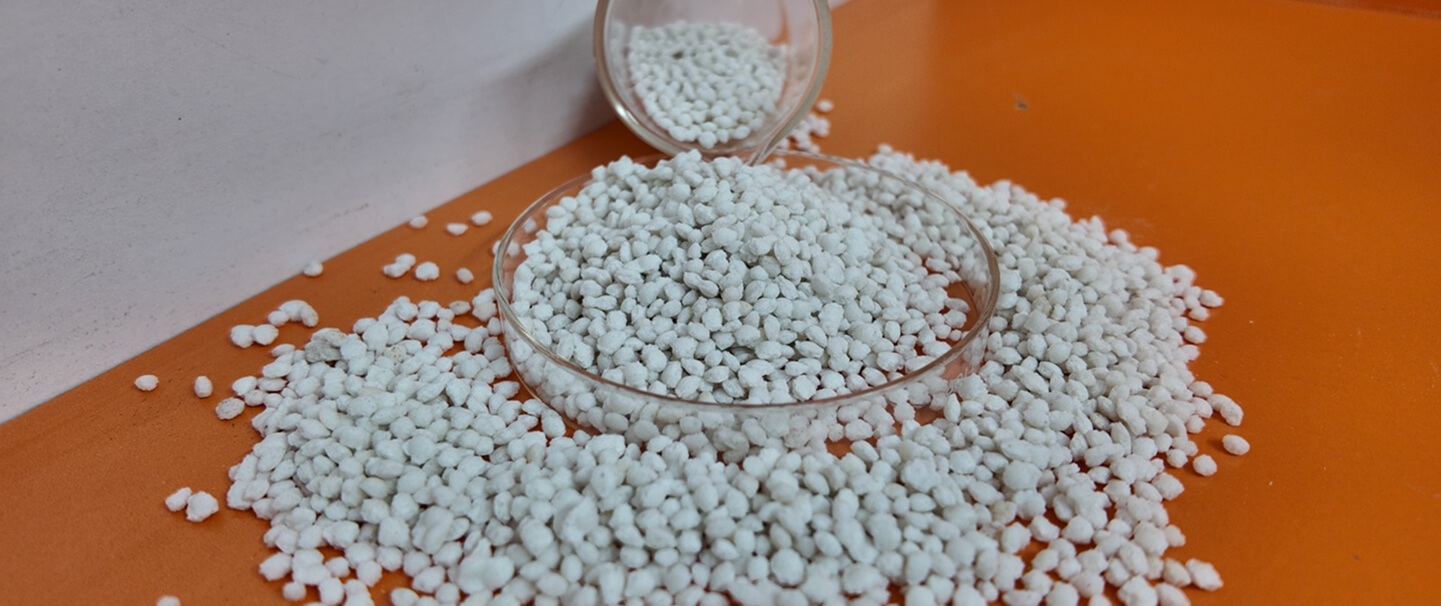
Granulated Ammonium Chloride contains a minimum of 25% nitrogen and meets FCO standards. Its difference is physical. It is available in granule form, rather than crystalline form.
- For the handler, that means more predictable flow and less caking to contend with.
- For warehouse teams, that means more manageable form during storage.
- For dealers and blenders, that means ease of mixing ACL with other fertilisers.
- For the farmer, that means easier application of the fertiliser across the field.
The granulated form also allows colour differentiation, which makes it simpler for anyone along the supply chain to identify the product at a glance.
Making the Familiar Better Is Also Progress
TFL’s engineers did not set out to replace Ammonium Chloride.
They spent time understanding where the product still created difficulty for the people who worked with it, and then they engineered those difficulties out.
That is exactly what we at AM International Holdings mean when we talk about combining decades of industrial experience with forward-looking innovation. Not abandoning what works, but making it work better for the people who depend on it.
Sometimes progress comes from creating what did not exist before. And sometimes it comes from a team of engineers who know a product well enough to ask one simple question: can we make this easier for the person at the other end?
We congratulate TFL’s R&D, production and quality teams for this achievement. We firmly believe that the same spirit of purposeful innovation will continue to keep AM International at the forefront of the industries we operate in.
